Every morning and evening, we perform a ritual that has a surprisingly massive environmental footprint. Over one billion plastic toothbrushes are discarded in the United States alone each year, creating approximately 50 million pounds of waste that will linger in landfills and oceans for centuries. The shift toward bamboo toothbrushes represents more than just a trendy eco-switch—it’s a tangible way to reduce your personal plastic waste. But here’s the thing: not all bamboo toothbrushes are created equal. Some are genuinely sustainable and clinically effective, while others are little more than greenwashed marketing campaigns that could compromise your oral health.
Finding a bamboo toothbrush that satisfies both environmental ethics and dental professional standards requires looking beyond pretty packaging and buzzwords. This comprehensive guide dives deep into what separates truly eco-friendly, dentist-approved bamboo toothbrushes from the imposters, equipping you with the knowledge to make an informed decision that benefits both your smile and the planet.
Top 10 Eco-Friendly Bamboo Toothbrushes
Detailed Product Reviews
1. VIVAGO Bamboo Toothbrushes 10 Pack - BPA Free Soft Bristles Toothbrushes, Eco-Friendly, Natural Wooden Toothbrush

Overview: The VIVAGO Bamboo Toothbrushes 10 Pack offers a straightforward eco-conscious alternative to conventional plastic brushes. With natural bamboo handles and soft BPA-free nylon bristles, this family-sized set provides a familiar brushing experience while reducing environmental impact. Each brush is numbered for easy identification among household members, packaged in sets of two within recyclable boxes.
What Makes It Stand Out: The numbering system stands out as a practical family feature, preventing bathroom mix-ups. The handles are fully compostable, and the 100% recyclable packaging demonstrates a commitment to sustainability beyond just the product itself. The soft bristles are specifically designed to be gentle on sensitive gums while maintaining durability, making it an accessible entry point for those new to bamboo toothbrushes.
Value for Money: At $8.98 for ten brushes ($0.90 each), these are competitively priced with mid-range plastic toothbrushes. The added environmental benefit of compostable handles and recyclable packaging creates significant value for eco-minded consumers without a price premium. The satisfaction guarantee further reduces purchase risk.
Strengths and Weaknesses: Strengths include the family-friendly numbering system, truly compostable bamboo construction, gentle soft bristles suitable for sensitive gums, and a reliable satisfaction promise. Weaknesses are that the nylon bristles aren’t biodegradable (a common industry limitation), and bamboo handles require proper drying to prevent premature degradation. The soft bristles may not satisfy those preferring firmer cleaning action.
Bottom Line: An excellent entry-level choice for families transitioning to sustainable oral care, balancing eco-friendliness with practical functionality and affordability.
2. VIVAGO Bamboo Toothbrushes 10 Pack – Natural Toothbrushes, Plant-Based Soft Bristles – Eco-Friendly Wooden Toothbrush

Overview: This VIVAGO variant elevates the eco-friendly toothbrush with plant-based soft bristles derived from castor oil. The 10-pack maintains the brand’s family-oriented design while offering a more sustainable bristle option than traditional nylon. Each numbered brush ensures easy identification in shared bathrooms, providing the same familiar brushing method as conventional brushes.
What Makes It Stand Out: The castor oil-based bristles represent a significant eco-upgrade, reducing petroleum-based materials without sacrificing softness. The ergonomic bamboo handle provides a comfortable natural grip, while the numbered system and sustainable packaging reinforce the environmental mission. This version specifically targets consumers seeking maximum sustainability throughout the entire product.
Value for Money: Priced identically to the nylon-bristle version at $8.98 ($0.90 per brush), you’re getting upgraded eco-credentials without additional cost. The plant-based bristles offer comparable cleaning performance while aligning with stricter environmental values. This makes it an exceptional value for purists wanting to minimize plastic usage completely.
Strengths and Weaknesses: Strengths include truly plant-based bristles, comfortable ergonomic handle, family numbering system, and comprehensive satisfaction guarantee. The main weakness is potential faster wear compared to nylon bristles. Like all bamboo brushes, proper care is essential to prevent handle molding. The soft bristles may feel too gentle for those accustomed to medium firmness.
Bottom Line: Ideal for environmentally conscious consumers who prioritize plant-based materials. This offers the best sustainability profile in the VIVAGO lineup without sacrificing affordability.
3. Virgin Forest 10 Count Bamboo Toothbrush, Soft Bristle for Adults, Eco Friendly Natural Wooden Toothbrushes, Vegan Organic Bamboo Travel Tooth Brush (10 Colors)

Overview: The Virgin Forest 10 Count Bamboo Toothbrush set distinguishes itself with vibrant color variety and specialized bristle design. Targeting adults who want both eco-friendliness and personalization, these soft-bristled brushes feature needle-shaped nylon filaments for precise cleaning. Each brush is marked with letters for family identification, making it ideal for households wanting visual differentiation.
What Makes It Stand Out: Ten distinct colors eliminate bathroom confusion more effectively than simple numbering. The needle-shaped bristles offer superior access to narrow mouth areas, while the glue-free construction appeals to purists. The recyclable kraft paper packaging enhances the eco-friendly presentation, and the lightweight design makes it travel-friendly.
Value for Money: At $9.99 ($1.00 per brush), it’s slightly pricier than competitors, but the color variety and specialized bristle design justify the modest premium. The travel-friendly lightweight packaging adds practical value for mobile users. For those prioritizing aesthetics and specialized cleaning, the extra cost is worthwhile.
Strengths and Weaknesses: Strengths include excellent color-coding, ergonomic polished handles, needle-shaped bristles for detailed cleaning, and plastic-free packaging. Weaknesses include the higher per-unit cost and explicit care warnings about bamboo’s natural deterioration. The nylon bristles, while high-quality, remain non-compostable. The soft bristles may not suit those wanting aggressive plaque removal.
Bottom Line: Perfect for households needing clear visual differentiation or travelers wanting a lightweight eco-option. The color variety and specialized bristles make it worth the small price increase.
4. VIVAGO Bamboo Toothbrushes Medium Bristles 10 Pack - BPA Free Medium Bristles Toothbrushes for Adults - Eco-Friendly, Natural Wooden Toothbrush

Overview: VIVAGO’s Medium Bristles 10 Pack caters to adults seeking more aggressive plaque removal while maintaining environmental responsibility. These bamboo toothbrushes feature 0.18mm medium nylon bristles that effectively dislodge food particles and buildup. The family-packaging approach remains consistent with the brand’s other offerings, with numbered brushes packed two per recyclable box.
What Makes It Stand Out: The medium bristle option fills a crucial gap for those finding soft bristles inadequate. The 0.18mm specification indicates precise engineering for optimal cleaning power. Maintaining the numbered family system and fully recyclable packaging shows VIVAGO’s commitment across all product variants, ensuring eco-friendliness doesn’t require compromising on personal preference.
Value for Money: At $9.98 ($1.00 per brush), it matches the premium pricing of specialized options while delivering a specific bristle firmness preference. For medium-bristle users, this represents fair value compared to hunting for eco-alternatives elsewhere. The satisfaction guarantee provides additional purchase confidence.
Strengths and Weaknesses: Strengths include effective medium bristles for thorough cleaning, sustainable bamboo handles, family-friendly numbering, and satisfaction guarantee. Weaknesses include medium bristles potentially irritating sensitive gums, and the same non-compostable nylon bristle limitation shared across most eco-brushes. Bamboo handle durability remains dependent on proper drying and care.
Bottom Line: The go-to choice for eco-conscious consumers who refuse to compromise on bristle firmness. It successfully bridges the gap between sustainability and deep-cleaning performance.
5. Navona 30 PCS Bamboo Toothbrushes, BPA Free Soft Bristles Toothbrush for Adults, Box of Two Kids Bamboo Toothbrushes Pack, Eco-Friendly Natural Wooden Toothbrush Bulk

Overview: The Navona 30 PCS Bamboo Toothbrushes set revolutionizes eco-friendly oral care through extreme bulk value. With 30 brushes at just $7.64 total, this offering costs significantly less per unit than any competitor while providing color variety for family organization. Each brush features BPA-free soft bristles and natural bamboo handles packaged two per brown paper card box.
What Makes It Stand Out: The unprecedented 30-count bulk packaging at $0.25 per brush creates unbeatable value. Various colors enable easy household member identification across a large family or shared living situation. The two-per-box packaging maintains eco-friendly principles even at scale, making sustainable choices accessible to budget-conscious consumers without sacrificing quality.
Value for Money: This is the undisputed value champion. At roughly one-quarter the price of competitors, you get three times the quantity. The per-brush cost makes sustainable choices accessible to budget-conscious consumers without sacrificing BPA-free bristles or natural bamboo construction. No other eco-toothbrush offers this economy of scale.
Strengths and Weaknesses: Strengths include exceptional bulk pricing, ample color variety, soft gentle bristles, and sturdy bamboo handles. The massive quantity is perfect for large families, group purchases, or extended-stay guests. Weaknesses include potential quality control issues at this price point, and 30 brushes may be excessive for smaller households. The brand lacks the established reputation of competitors like VIVAGO.
Bottom Line: The ultimate bulk solution for large families, shared housing, or anyone wanting to stock up on eco-friendly toothbrushes without financial strain. Quantity and value are unmatched.
6. Isshah Biodegradable Eco-Friendly Natural Bamboo Charcoal Toothbrushes, FSC Certified and PETA Approved - 12 Count

Overview: The Isshah Bamboo Charcoal Toothbrush 12-pack offers a certified sustainable oral care solution for environmentally conscious families. Each toothbrush features a natural bamboo handle and soft nylon bristles, providing a green alternative to conventional plastic brushes. With both FSC certification and PETA approval, this set promises ethical sourcing and cruelty-free production, making it ideal for households looking to reduce their environmental footprint without sacrificing dental hygiene.
What Makes It Stand Out: These toothbrushes distinguish themselves through third-party validations that many competitors lack. The FSC certification ensures responsibly sourced bamboo, while PETA approval guarantees no animal testing. The smooth, water-resistant bamboo handle requires no special drying routine—simply rinse and store like a conventional toothbrush. The 100% recycled biodegradable packaging extends the eco-friendly commitment beyond the product itself, and the 12-count quantity conveniently provides a year’s supply for an individual.
Value for Money: At $9.49 for 12 brushes ($0.79 each), this pack delivers excellent value for a dual-certified sustainable product. While slightly pricier than generic plastic toothbrushes, the cost aligns with standard bamboo alternatives while offering superior credibility through its certifications. For families prioritizing verified eco-credentials, the modest premium over non-certified competitors represents a worthwhile investment in genuine sustainability.
Strengths and Weaknesses: Strengths include respected environmental certifications, splinter-proof water-resistant handles, fully recyclable packaging, generous 12-count quantity, and gentle soft bristles suitable for most users. Weaknesses are limited to soft bristles only (no medium option), nylon bristles that aren’t home-compostable, and the need to remove bristles before composting handles. The branding may also wear off with extended use.
Bottom Line: The Isshah 12-pack is an outstanding choice for eco-minded consumers seeking verified sustainable credentials. While the nylon bristles require proper disposal, the certified bamboo handles and recycled packaging make this a genuinely responsible choice that balances environmental ethics with practical daily use.
7. NUDUKO Bamboo Toothbrushes Biodegradable Toothbrush 10 Pack - Eco-Friendly, Natural Wooden Tooth Brush, BPA Free Travel Size Organic Soft Bristle Toothbrush, Soft Toothbrushes for Adults

Overview: NUDUKO’s 10-pack bamboo toothbrushes provide an affordable entry point into sustainable oral care for families and travelers. These brushes feature natural bamboo handles with soft, BPA-free nylon bristles, individually packaged in recyclable cardboard. The travel-friendly size and clear identification system make them practical for households seeking to eliminate plastic waste from their daily routines without complicating their bathroom organization.
What Makes It Stand Out: The thoughtful A-E marking system on each brush eliminates household mix-ups—a common frustration with uniform bamboo toothbrushes. Individual cardboard packaging maintains hygiene while remaining fully recyclable, ideal for travel or guest bathrooms. The soft BPA-free bristles cater to users with sensitive gums, and the compact size fits standard travel cases. NUDUKO’s direct messaging about proper storage (ventilated, dry environments) demonstrates practical consumer guidance often missing from eco-products.
Value for Money: Priced at $7.99 for 10 brushes ($0.80 each), this pack offers competitive pricing that matches many plastic alternatives. The cost per brush is virtually identical to the Isshah 12-pack, though without premium certifications. For budget-conscious families wanting to test bamboo toothbrushes without financial commitment, this represents minimal risk. The 10-pack quantity suits smaller households or serves as a convenient travel stash.
Strengths and Weaknesses: Strengths include the smart labeling system, individual recyclable packaging, budget-friendly pricing, soft BPA-free bristles, and clear usage instructions. Weaknesses involve lack of environmental certifications, nylon bristles requiring manual removal for composting, potential handle wear in very humid bathrooms, and limited bristle firmness options. Some users may find the handles slightly thinner than conventional brushes.
Bottom Line: NUDUKO’s 10-pack delivers practical, affordable sustainability for everyday families. While it lacks premium certifications, the intelligent design features and competitive pricing make it an excellent starter pack for those transitioning away from plastic toothbrushes.
8. paeyaer 20 Count Bamboo Toothbrushes (Soft+Medium), Natural Wood Toothbrush Bulk, Eco-Friendly, BPA Free, Biodegradable & Compostable Charcoal Wooden - Reusable Travel Toothbrushes

Overview: The paeyaer 20-count bundle offers unmatched versatility for households with diverse brushing preferences. This bulk pack includes 10 soft and 10 medium bristle bamboo toothbrushes, accommodating both sensitive gum users and those desiring more aggressive cleaning. Natural bamboo handles and BPA-free bristles provide an eco-friendly foundation, while the dual-firmness approach eliminates compromise in families with varying oral care needs.
What Makes It Stand Out: The soft-plus-medium combination is a rare find in bamboo toothbrush sets, typically offered in single-firmness bulk packs. Each individual box contains two numbered brushes, preventing family member confusion while reducing packaging waste compared to fully separate wrapping. This hybrid approach serves multiple user types—from children needing gentle care to adults preferring firmer plaque removal—making it uniquely practical for multi-generational households.
Value for Money: At $9.99 for 20 brushes ($0.50 each), this pack delivers exceptional value, undercutting most competitors by 30-40%. The dual-firmness offering essentially provides two specialized products for the price of one, maximizing utility. For large families, shared housing, or those wanting to stock up, the per-unit cost is among the lowest in the sustainable toothbrush market without sacrificing quality.
Strengths and Weaknesses: Strengths include the innovative soft/medium mix, rock-bottom per-unit pricing, numbered organization system, sturdy bristle attachment, and versatile applications from home to travel. Weaknesses are minimal: the charcoal branding is largely aesthetic (limited proven benefits), handles may be slightly bulkier for small hands, and the large quantity requires storage space. Nylon bristles still need proper disposal before composting handles.
Bottom Line: Paeyaer’s 20-count bundle is the smart choice for budget-savvy, eco-conscious households with varied brushing preferences. The unmatched value and dual-firmness flexibility make it the top bulk option for families ready to fully commit to sustainable oral care.
9. NUDUKO Biodegradable Toothbrush 10 Pack Bamboo Toothbrushes - Eco-Friendly, Natural Wooden Tooth Brush, BPA Free Organic Soft Bristle Toothbrush,Soft Toothbrushes for Adults (Multicolored Bristles)
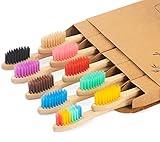
Overview: This NUDUKO 10-pack variant distinguishes itself through vibrant multicolored bristles while maintaining the brand’s core sustainable values. Featuring charcoal-infused soft nylon bristles in assorted colors, these bamboo toothbrushes offer visual appeal alongside eco-friendly functionality. The natural bamboo handles and recyclable cardboard packaging align with zero-waste principles, while the color-coding system provides practical household organization.
What Makes It Stand Out: The multicolored bristles transform a mundane necessity into a personalized experience, particularly appealing to children and design-conscious adults. Charcoal infusion adds a trendy element, though primarily aesthetic. The A-E marking system remains, but color differentiation provides an additional identification layer. This variant maintains NUDUKO’s emphasis on proper storage guidance and individual recyclable packaging, ensuring hygiene without plastic waste.
Value for Money: At $7.99 for 10 brushes ($0.80 each), pricing mirrors NUDUKO’s standard 10-pack, offering color variety at no premium. This positions it competitively against plain bamboo brushes while adding functional value through easier identification. For families where color preference prevents mix-ups, the psychological benefit alone justifies the cost. The charcoal bristle feature, while marginally increasing perceived value, doesn’t inflate the price.
Strengths and Weaknesses: Strengths include cheerful color options, charcoal-infused bristles (aesthetic appeal), BPA-free soft bristles, individual recyclable packaging, and dual identification system (letters + colors). Weaknesses mirror the standard NUDUKO pack: no environmental certifications, nylon bristles requiring removal for composting, potential handle wear, and limited firmness options. Some users may find the charcoal flavor initially unusual.
Bottom Line: NUDUKO’s multicolored variant successfully combines sustainability with personality, making it ideal for families wanting eco-products that don’t feel utilitarian. The colors encourage consistent use while maintaining solid environmental credentials at a fair price.
10. Goaycer Eco Friendly Bamboo Toothbrush, 10Pack Medium Firm Bristles Biodegradable Bulk Wooden Toothbrushes

Overview: Goaycer’s 10-pack targets users desiring firmer cleaning action from their sustainable toothbrush choice. Using premium Mao bamboo, these brushes feature medium-firm BPA-free bristles that balance effective plaque removal with gum safety. The five-color system helps families differentiate brushes while the carbonized water-resistant finish extends handle longevity. Fully biodegradable packaging completes the eco-conscious design.
What Makes It Stand Out: The medium-firm bristles fill a market gap—most bamboo brushes offer only soft bristles, leaving users wanting more cleaning power underserved. The Mao bamboo construction, known for superior hardness, combined with a carbonized finish, creates exceptionally durable handles that resist splintering and water damage better than standard bamboo. The reusable handle suggestion for crafts or garden markers demonstrates circular thinking beyond disposal.
Value for Money: At $8.99 for 10 brushes ($0.90 each), Goaycer commands a slight premium over competitors, justified by the medium-firm bristle option and premium Mao bamboo construction. For users specifically seeking firmer sustainable brushes, this specialization warrants the 10-15% price increase. The five-color differentiation adds value for larger households, preventing replacement confusion.
Strengths and Weaknesses: Strengths include the rare medium-firm bristle option, premium Mao bamboo durability, carbonized water-resistant finish, five-color family pack, BPA-free recyclable bristles, and creative reuse potential. Weaknesses involve the higher price point, potential roughness for sensitive gums, limited softness options, and the need to remove nylon bristles before composting. The medium-firm rating may not suit all dentists’ soft-bristle recommendations.
Bottom Line: Goaycer’s medium-firm pack is the go-to choice for eco-conscious users unwilling to sacrifice cleaning power for sustainability. The premium materials and specialized bristle firmness make it worth the modest upcharge for those specific needs.
The Environmental Impact of Your Toothbrush Choice
Your toothbrush might seem like a small item, but its cumulative environmental impact is staggering. A single plastic toothbrush can take over 400 years to decompose, breaking down into microplastics that contaminate waterways and enter food chains. Bamboo toothbrushes offer a compelling alternative because bamboo is technically a grass, not a tree, and can grow up to three feet in just 24 hours under optimal conditions. This rapid renewability makes it one of the most sustainable materials on Earth when harvested responsibly. However, the eco-friendliness of a bamboo toothbrush extends beyond just the handle material. The manufacturing process, transportation footprint, packaging, and end-of-life disposal all factor into its true environmental scorecard. Understanding this full lifecycle helps you evaluate whether a product genuinely reduces your ecological impact or simply shifts the burden elsewhere.
What “Dentist-Approved” Actually Means for Bamboo Toothbrushes
When dental professionals evaluate a toothbrush, they’re looking at specific clinical criteria that have nothing to do with the handle material. A dentist-approved bamboo toothbrush must meet the same rigorous standards as its plastic counterpart. The American Dental Association (ADA) bases its recommendations on factors like bristle end-rounding, handle durability, and plaque removal efficacy. The handle could be carved from the most sustainable bamboo forest on Earth, but if the bristles are too abrasive or poorly constructed, it’s a non-starter for oral health. This section explores the non-negotiable dental criteria that any toothbrush—bamboo or otherwise—must satisfy to earn professional endorsement.
Bristle Quality and Effectiveness
The business end of any toothbrush is its bristles, and this is where many eco-friendly options fall short. Dentist-approved bristles must have carefully polished, end-rounded tips to prevent enamel abrasion and gum recession. Under a microscope, cheaply manufactured bristles often have jagged, sharp edges that act like tiny saws on your delicate gum tissue. Quality bamboo toothbrushes use the same high-grade nylon bristles as premium plastic brushes, typically Dupont Tynex, which undergoes a specialized polishing process. The bristle pattern matters too—waved or angled configurations can improve interdental cleaning by up to 21% compared to flat-trimmed designs. When evaluating options, look for detailed information about bristle manufacturing standards rather than just “soft” or “medium” labels.
Handle Design and Ergonomics
A handle that slips from your grip or forces awkward brushing angles can sabotage your technique, leading to missed plaque and potential injury. Dental professionals emphasize that handle design directly influences brushing duration and pressure—two critical factors in preventing both under-brushing and over-brushing. The ideal bamboo toothbrush handle features a contoured grip with subtle texturing, a balanced weight distribution, and a neck angle between 15-20 degrees for optimal reach to posterior teeth. Flat, rectangular handles might look minimalist and chic, but they often compromise functional ergonomics. The best designs incorporate a slight thumb depression and tapered neck that dental hygienists recognize as promoting the modified Bass technique, the gold standard for plaque removal.
ADA Seal of Acceptance: What to Know
Here’s a crucial distinction: as of 2024, no 100% bamboo or biodegradable toothbrush has earned the ADA Seal of Acceptance. This isn’t because bamboo is inherently inferior, but because the ADA requires extensive clinical testing and standardized manufacturing processes that most small eco-brands can’t afford. However, some bamboo toothbrushes use ADA-approved bristle heads attached to bamboo handles. Understanding this nuance prevents unrealistic expectations. A toothbrush can be dentist-approved in practice—using the same materials and design principles as ADA-accepted brushes—without bearing the official seal. Look for brands that transparently discuss their manufacturing partners and bristle suppliers rather than making unsubstantiated ADA claims.
Understanding Bamboo as a Sustainable Material
Not all bamboo is equally sustainable, and the devil is in the cultivation details. The bamboo species, farming practices, and processing methods dramatically affect the final product’s environmental integrity. Moso bamboo (Phyllostachys edulis) has become the industry standard for quality toothbrushes because it’s naturally pest-resistant, requiring no pesticides or fertilizers. This species also regenerates from its own root system after harvesting, eliminating the need for replanting and preventing soil erosion. However, the explosion in bamboo product demand has led to monoculture farming in some regions, which devastates local biodiversity and depletes soil nutrients. Truly sustainable brands provide supply chain transparency, often sourcing from FSC-certified bamboo forests that maintain ecological balance.
Moso Bamboo: The Gold Standard
Moso bamboo’s cellular structure makes it ideal for toothbrush handles—it’s dense enough to resist water absorption but not so hard that it splinters easily. This species grows naturally in temperate climates, primarily in China’s Zhejiang province, where it’s been cultivated sustainably for millennia. The key advantage is its rapid growth cycle: mature stalks suitable for harvesting appear within 3-5 years, compared to 20-50 years for hardwood trees. Importantly, Moso bamboo is not a food source for pandas, addressing a common consumer concern. When evaluating a toothbrush, check if the brand specifies Moso bamboo—vague “natural bamboo” claims often indicate lower-grade species that may be harvested unsustainably or treated with chemical preservatives.
Bamboo Cultivation and Harvesting Practices
Sustainable harvesting involves selective cutting of mature stalks (3-5 years old) while leaving younger shoots intact. This mimics natural forest dynamics and ensures continuous growth. Unfortunately, the surge in bamboo popularity has incentivized clear-cutting practices in some regions, destroying ecosystems and releasing stored carbon. Ethical brands partner with cooperatives that practice rotational harvesting and maintain buffer zones around waterways. Some even implement agroforestry systems where bamboo grows alongside native species, creating wildlife corridors. Look for certifications like the Forest Stewardship Council (FSC) or statements about small-scale farming partnerships. The carbon footprint also matters—bamboo processed and shipped with minimal transportation miles has a significantly lower impact than material that travels through multiple international facilities.
Bristle Breakdown: What You Need to Know
The bristle conversation is where idealism meets reality in the bamboo toothbrush world. While the handle might return to the earth gracefully, the bristles present a complex sustainability challenge that brands often gloss over. Understanding the material science helps you make choices aligned with both your environmental values and oral health needs.
Nylon Bristles: The Common Choice
Approximately 95% of bamboo toothbrushes use nylon bristles, typically nylon-6 or nylon-610. These are not biodegradable and must be removed before composting the handle. However, they’re the preferred choice for most dental professionals because they maintain their shape, resist bacterial growth, and can be precisely end-rounded. The environmental trade-off is significant but not absolute—nylon bristles represent less than 1% of the toothbrush’s total weight, and some recycling programs now accept them. The key is choosing brushes with high-quality nylon that lasts the recommended three months without splaying, reducing overall waste through durability.
Plant-Based Bristle Alternatives
Some brands offer castor bean oil-based bristles marketed as “bio-based” or “plant-based.” These typically contain 60-70% renewable content but are still partially petroleum-derived and not home-compostable. Truly biodegradable bristles made from boar hair exist but present ethical concerns and are not vegan-friendly. They also lack the consistent quality control of synthetic bristles, potentially harboring bacteria and shedding. Experimental materials like bamboo charcoal fiber and cornstarch-based polymers show promise but haven’t demonstrated the longevity and safety profile required for dentist approval. For now, high-quality nylon remains the clinical standard, with plant-based options representing a marginal improvement rather than a perfect solution.
Bristle Softness Levels and Gum Health
Dentists overwhelmingly recommend soft bristles for most patients, with extra-soft for those with gum recession or sensitive teeth. The softness is determined by bristle diameter (typically 0.18-0.22mm for soft) and the number of individual filaments per tuft. Medium and hard bristles can cause abrasive damage to enamel and gingival tissue, particularly with aggressive brushing techniques. Some bamboo toothbrushes use “medium” bristles for marketing differentiation, but these should be avoided unless specifically recommended by your dentist for unique circumstances. Quality soft bristles effectively remove plaque without trauma when used correctly—the key is technique, not force.
Key Features to Evaluate When Shopping
Beyond the basic materials, several design and manufacturing details separate exceptional bamboo toothbrushes from mediocre ones. These features directly impact user experience, product longevity, and environmental impact.
Handle Coating and Treatment
Raw bamboo is naturally antimicrobial thanks to a bio-agent called “bamboo kun,” but it’s also porous and prone to water damage. Most quality brushes use a natural beeswax or plant-based oil coating to repel water without introducing synthetic sealants. Some brands use chemical varnishes that compromise compostability—avoid these. The coating should be thin enough to maintain bamboo’s natural texture while preventing swelling and cracking. Uncoated handles may develop a patina over time, which is normal and doesn’t affect functionality, though they require more diligent drying to prevent mold.
Bristle Density and Arrangement
A dentist-approved brush typically contains 1,500-2,500 individual bristles arranged in precise patterns. Higher density doesn’t always mean better cleaning—strategic spacing allows bristles to splay into interdental spaces effectively. Look for multi-level or crisscross patterns that have demonstrated superior plaque removal in clinical studies. The tufting pattern should create a slight dome shape that matches the natural curvature of teeth. Avoid brushes with sparse bristles or irregular patterns that leave cleaning gaps.
Head Size and Shape Options
The brush head should comfortably fit in your mouth, allowing access to posterior molars without triggering gag reflexes. For most adults, a head length of 1-1.25 inches is optimal. Compact heads (around 0.75 inches) work well for smaller mouths or precision cleaning. The shape—oval, rectangular, or tapered—matters less than the size, but tapered designs often improve reach. Some brands offer multiple head sizes, which is a sign of thoughtful design rather than one-size-fits-all thinking.
Certifications That Matter
In a market flooded with greenwashing, third-party certifications provide objective verification of environmental and safety claims. However, not all certifications carry equal weight.
FSC Certification Explained
The Forest Stewardship Council certification ensures bamboo comes from responsibly managed forests that provide environmental, social, and economic benefits. For toothbrushes, look for the FSC Mix or FSC 100% label. This certification prohibits illegal logging, protects indigenous rights, and maintains high conservation values. It’s currently the gold standard for verifying sustainable sourcing, though the certification process is expensive, so some small, ethical brands may use alternative verification methods like direct farm partnerships.
BPA-Free and Toxin-Free Labels
While bamboo handles are naturally BPA-free, bristles and any coatings must be verified. BPA (Bisphenol A) and phthalates can disrupt hormones and accumulate in the body. Quality brands provide third-party lab testing results for heavy metals, pesticides, and plasticizers. The “toxin-free” claim should extend beyond just BPA to include formaldehyde, lead, and other contaminants sometimes found in cheap bamboo products treated with chemical preservatives during shipping.
Compostability Standards
True compostability means the handle breaks down into non-toxic, nutrient-rich soil within 90-180 days in industrial composting conditions. Home composting takes longer—typically 6-12 months. Look for ASTM D6400 or EN 13432 certification for compostability. Be wary of vague “biodegradable” claims without specific standards or timeframes. Some brands provide prepaid composting programs, a strong indicator of genuine commitment to circular economy principles.
The Truth About Biodegradability
The term “biodegradable” is perhaps the most misused and misunderstood claim in the eco-product space. Understanding the science helps set realistic expectations and prevents disappointment.
What “Biodegradable” Really Means
Biodegradation is a biological process where microorganisms break down materials into water, carbon dioxide, and biomass. The critical factor is time frame and conditions. In a landfill’s anaerobic environment, even organic materials like bamboo can take decades to decompose while releasing methane. A bamboo toothbrush handle is biodegradable in the right conditions—adequate moisture, oxygen, and microbial activity—but not in the plastic bag it might be thrown away in. The FTC requires that biodegradable claims be substantiated with scientific evidence and reasonable timeframes, though enforcement remains spotty.
Home vs. Industrial Composting
Home composting systems rarely reach the sustained high temperatures (130-160°F) needed for rapid bamboo decomposition. In a backyard bin, a toothbrush handle might take 6-12 months to break down, and only if broken into smaller pieces first. Industrial composting facilities maintain these temperatures and produce finished compost in 90-180 days. Check if your local municipality accepts bamboo products—many do, but some exclude anything resembling wood. The bristles must be removed regardless of composting method, as they won’t break down and contaminate the compost.
The Bristle Dilemma
This is the elephant in the room: truly biodegradable bristles that meet dentist standards don’t currently exist. Plant-based nylon alternatives still contain petroleum components and require industrial composting. Boar bristles are biodegradable but not vegan and can harbor bacteria. Some innovative brands are experimenting with bamboo fiber bristles, but these lack the durability and safety testing of synthetic options. The most honest approach is selecting durable nylon bristles that last the full three months, minimizing waste through longevity, and participating in specialized recycling programs for the bristles.
Proper Care for Longevity
A well-maintained bamboo toothbrush can last its intended three-month lifespan without developing issues that compromise hygiene or functionality. Proper care also ensures the handle doesn’t prematurely degrade, maximizing your investment.
Storage Best Practices
Never store a bamboo toothbrush in a closed container where moisture accumulates. Instead, place it upright in an open-air holder with drainage holes. The bathroom’s natural humidity means bamboo handles absorb moisture, so allow airflow around the entire brush. Some users store their brush outside the bathroom entirely, which also reduces exposure to toilet plume aerosols. After use, shake off excess water and store bristle-up. Avoid toothbrush covers unless traveling—they create a petri dish environment.
Cleaning Your Bamboo Toothbrush
Weekly sanitization prevents bacterial buildup without damaging the bamboo. Soak the bristles in hydrogen peroxide for 10 minutes or use a UV sanitizer designed for toothbrushes. Never boil a bamboo toothbrush or run it through the dishwasher—extreme heat cracks the handle and loosens bristles. If the handle develops dark spots, lightly sand the area with fine-grit paper and re-oil with food-grade mineral oil. This maintains the antimicrobial surface while preventing water penetration.
When to Replace It
Dentists recommend replacement every three months or when bristles show splaying, whichever comes first. With bamboo brushes, also inspect the handle for cracks where bacteria could harbor. If the bristle base becomes loose or the handle feels rough despite oiling, it’s time to retire it. Mark your calendar when you start using a new brush—waiting for visual cues often means you’ve used it too long, reducing cleaning effectiveness.
End-of-Life Disposal Done Right
The responsible disposal of a bamboo toothbrush requires more effort than tossing it in the trash, but this extra step is where the environmental benefits materialize. Doing it correctly ensures your sustainable choice doesn’t end up in landfill limbo.
Removing Bristles Step-by-Step
Use pliers to grip a small section of bristles and pull firmly with a twisting motion. They’re typically stapled into the handle with tiny metal clips. Work in sections until all bristles are removed. This takes about 2-3 minutes per brush. Collect the bristles in a small container—some brands offer mail-back recycling programs. The metal staples can be recycled with household metal if your local program accepts small items, or saved in a metal can until you have enough to recycle.
Composting the Handle
Once de-bristled, break the handle into smaller pieces with pliers or a saw to accelerate decomposition. Add it to your compost bin like any other woody material. If you don’t compost at home, many communities have organics collection programs that accept bamboo. Some eco-conscious brands partner with TerraCycle or similar programs offering prepaid shipping labels for handle composting. Never burn bamboo handles—treated bamboo can release harmful compounds, and burning wastes the material’s nutrient value.
Creative Reuse Ideas
Before composting, consider giving your toothbrush a second life. Cleaned handles make excellent plant markers for your garden, craft sticks for stirring paint, or cleaning tools for tight spaces. Some creative users carve them into utensils or use them as kindling for campfires (untreated bamboo only). This extends the product’s utility and delays its return to the ecosystem, which is actually beneficial from a carbon sequestration perspective.
Cost Analysis: Bamboo vs. Plastic
The price gap between sustainable and conventional products often deters consumers, but a deeper analysis reveals a more nuanced economic picture that extends beyond the sticker price.
Price Per Brush Breakdown
A quality bamboo toothbrush typically costs $3-6, compared to $1-3 for a plastic equivalent. This 2-3x premium reflects sustainable sourcing, ethical manufacturing, and smaller production scales. However, when amortized over the three-month lifespan, the cost difference is pennies per day. For a family of four, the annual difference might be $20-40—roughly the cost of one restaurant meal. Some dental insurance plans now cover eco-friendly oral care products, and HSA/FSA accounts often reimburse them as medical expenses.
Subscription Services and Bulk Options
Many bamboo toothbrush brands offer subscription models that reduce cost by 15-30% while ensuring timely replacement. These services often include prepaid recycling for used brushes, closing the loop on waste. Bulk purchasing—buying a year’s supply at once—similarly reduces per-unit cost and packaging waste. The subscription model aligns with dental replacement schedules, improving oral health outcomes while reducing decision fatigue.
Long-Term Value Considerations
Factor in the externalized costs of plastic pollution—environmental cleanup, healthcare impacts from microplastics, and climate change contributions. While these don’t appear on your receipt, they represent real societal costs. Some municipalities now charge extra for non-recyclable waste, making compostable bamboo handles financially advantageous. Additionally, the aesthetic and psychological satisfaction of aligning purchases with values has measurable wellbeing benefits that economists call “utility value.”
Addressing Common Concerns
Potential users often hesitate over practical issues that, while legitimate, are usually manageable with proper information and technique. Let’s debunk the most common worries.
Mold and Moisture Issues
Yes, bamboo can develop mold in persistently damp conditions, but this is preventable. The same antimicrobial compounds that protect living bamboo remain active in the handle for months. Mold typically appears only when brushes are stored improperly—like in closed cups or drawers. If mold develops, it’s usually surface-level and can be removed with vinegar or hydrogen peroxide. Proper drying and occasional oiling prevent it entirely. Plastic brushes harbor bacteria too; they just don’t show visible growth. Studies show that well-maintained bamboo handles have similar bacterial counts to plastic ones.
Splintering and Durability
High-quality bamboo toothbrushes rarely splinter if properly finished. The manufacturing process involves sanding, polishing, and coating that seals the wood grain. Splintering usually occurs with cheap brushes that skip these steps or use immature bamboo. A well-made handle feels smooth and solid, not rough or fibrous. If splintering occurs, stop using it immediately and sand the area smooth. This issue is more common with ultra-budget options under $2—another reason to invest in quality.
Travel-Friendly Solutions
Bamboo toothbrushes travel well with proper cases. Look for ventilated bamboo or fabric cases that allow airflow. Avoid airtight plastic cases that trap moisture. For air travel, bamboo handles are lightweight and TSA-compliant. Some brands offer travel sets with removable heads to reduce bulk. The key is ensuring the brush dries completely before packing it away. Many eco-conscious hotels now provide bamboo toothbrushes, so you might not need to bring one at all.
Making the Switch: Transition Tips
Transitioning to bamboo toothbrushes involves more than just a purchase—it’s a habit shift that affects your entire household’s routine and waste management.
Gradual Transition Strategies
Start by replacing just your brush, keeping plastic ones as backups. This allows you to test different brands and find your preference without committing to a year’s supply. Some users keep a plastic brush for travel and bamboo for home use. Others transition by function—a soft bamboo brush for daily use and a plastic electric brush for weekly deep cleans. This hybrid approach reduces plastic waste by 70-80% while maintaining all oral health tools.
Family-Friendly Considerations
Getting buy-in from family members requires addressing individual preferences. Let each person choose their own handle color or design—many brands offer natural wood staining or engraved patterns. For teenagers concerned about aesthetics, minimalist bamboo designs often appeal more than “eco-cute” styles. Create a family disposal station where everyone learns to remove bristles together, making it a shared responsibility rather than a chore. The cost difference for a family is minimal but the environmental lesson for children is invaluable.
Kids’ Bamboo Toothbrushes
Children’s bamboo toothbrushes require special attention to head size, bristle softness, and handle thickness for small hands. Look for age-appropriate sizing (2-4 years, 5-8 years, etc.) and fun designs that encourage use. The handles should be coated with non-toxic, saliva-safe finishes since kids often chew on them. Bristle durability is crucial because children sometimes press harder than necessary. Some brands offer replacement head systems for kids, reducing waste and cost as they outgrow handles less quickly than bristles wear out.
Frequently Asked Questions
How long do bamboo toothbrushes actually last compared to plastic ones?
With proper care, a quality bamboo toothbrush lasts the same three months as a plastic brush. The handle won’t degrade during normal bathroom use if you allow it to dry between uses. In fact, some users report bamboo handles feel more durable than cheap plastic ones that develop loose heads. The key is storing it upright in a ventilated area and not letting it sit in water.
Can I really compost the handle in my backyard bin?
Yes, but it requires patience. Break the handle into smaller pieces first and bury it in the center of your compost pile where microbial activity is highest. It will decompose in 6-12 months depending on your climate and composting method. If you have a tumbling composter, it may take longer due to lower temperatures. The handle adds valuable carbon to your compost, balancing nitrogen-rich food scraps.
Are the bristles really that bad for the environment?
Nylon bristles represent less than 1% of the toothbrush’s weight and environmental impact. While not biodegradable, their durability means fewer replacements and less waste overall. Some brands now offer bristle recycling programs where you can mail them back. The environmental math still favors bamboo brushes with nylon bristles over entirely plastic brushes, especially when you factor in the compostable handle and reduced packaging.
Will a bamboo toothbrush clean my teeth as well as my electric brush?
Manual bamboo toothbrushes can be equally effective when used with proper technique—two minutes, twice daily, with correct angulation and pressure. Electric brushes have a slight edge for people with limited dexterity or orthodontic appliances. However, the difference is minimal compared to the technique. A bamboo manual brush used correctly outperforms an electric brush used poorly. Some companies now offer bamboo electric brush heads, giving you the best of both worlds.
Why do some bamboo toothbrushes cost so much more than others?
Price differences reflect bamboo quality, bristle grade, manufacturing ethics, and certifications. Premium brushes use mature Moso bamboo, Dupont Tynex bristles, and fair-wage production facilities. Cheaper options may use immature bamboo, inferior bristles that splay quickly, and lack quality control. The cost per use over three months is still minimal, and investing in quality ensures you get the full lifespan without compromising oral health.
How do I know if a brand is greenwashing?
Look for specific, verifiable claims rather than vague marketing language. Genuine brands detail their bamboo species, bristle composition, manufacturing location, and disposal instructions. They provide certifications with numbers you can verify online. Be suspicious of “100% biodegradable” claims without composting timeframes, or brushes with plastic packaging. Transparency about nylon bristles indicates honesty, while hiding this detail suggests greenwashing.
Can I use a bamboo toothbrush with braces or dental work?
Yes, but choose one with a compact head and soft, end-rounded bristles. The handle should provide precise control for navigating brackets and wires. Some orthodontists recommend interdental brushes or water flossers in addition to regular brushing. Bamboo handles offer good grip control, which helps prevent the excessive pressure that can damage orthodontic appliances. Replace the brush more frequently—every 6-8 weeks—since braces wear down bristles faster.
What about the pandas? Does toothbrush bamboo affect them?
Moso bamboo, used for toothbrushes, is not a panda food source. Pandas prefer different bamboo species that grow at higher elevations. Responsible harvesting actually supports panda conservation by providing economic incentives for local communities to maintain bamboo forests rather than converting them to agriculture. Some toothbrush brands donate a portion of profits to panda sanctuaries, turning your purchase into active conservation support.
Are there any dental conditions that make bamboo toothbrushes unsuitable?
Bamboo toothbrushes work for virtually everyone, but those with severe hand arthritis might prefer electric brushes. People with aggressive brushing habits should ensure they choose soft bristles and consider a handle with a grip aid. If you have an extremely dry mouth (xerostomia), bamboo handles might absorb more moisture than ideal—store them outside the bathroom. Otherwise, bamboo is suitable for sensitive teeth, gum disease, and post-surgical care when paired with appropriate bristle softness.
How do I travel with a bamboo toothbrush without it getting moldy?
Use a ventilated travel case made from bamboo, cotton, or mesh. Ensure the brush is completely dry before packing—give it 30 minutes of air drying after your final brush. For long trips, bring two brushes and alternate them daily, allowing each to fully dry. If you’re camping, hang the brush from your pack using a string through the handle hole. Some travelers pack a small bottle of tea tree oil to occasionally sanitize the handle, though this isn’t necessary with proper drying.