If you’ve ever watched a powerful athlete churning down the track, towing a weighted sled behind them with explosive determination, you’ve witnessed one of the most effective training modalities in modern sports performance. But here’s what the highlight reels don’t show: the unsung hero connecting that athlete to their resistance—the weight sled harness. This critical piece of equipment can mean the difference between transformative strength gains and frustrating training sessions that leave you with bruised shoulders and compromised form.
Choosing the right harness isn’t just about strapping yourself to a sled and pulling. It’s about biomechanics, load distribution, sport-specific demands, and long-term durability. Whether you’re a sprint coach looking to maximize horizontal force production, a CrossFit athlete building work capacity, or a football player developing game-breaking power, understanding the nuances of sled harness design will elevate your training from good to elite. This comprehensive guide breaks down everything you need to know to make an informed decision—no brand bias, no sponsored recommendations, just pure performance-focused expertise.
Top 10 Weight Sled Harnesses for Athletes
Detailed Product Reviews
1. MiR BHAR Sled Harness with (Optional) Sled Harness, Without Sled, Black

Overview: The MiR BHAR Sled Harness is a heavy-duty pulling harness designed for serious athletes seeking a durable, standalone harness solution. Constructed from reinforced nylon with steel D-rings, this system focuses on comfort and mobility during intense sled training sessions. Note that this product includes only the harness and 9-foot strap—no sled is provided despite the somewhat confusing product title.
What Makes It Stand Out: This harness distinguishes itself through professional-grade construction with dual reinforced black steel D-rings positioned at both front and back, offering versatile attachment options. The 3-inch narrow shoulder design maximizes upper body mobility while side padding protects ribs during explosive movements. The included 9-foot pull strap provides ample distance from the sled, and the optional Power Sled compatibility supports loads up to 200 pounds.
Value for Money: At $32.98, this harness sits in the mid-range for standalone harness systems. While you must purchase a sled separately, the heavy-duty materials and dual-ring configuration justify the price compared to basic single-strap alternatives. For athletes who already own a sled or prefer to build their own, this offers professional features without the premium brand markup.
Strengths and Weaknesses: Strengths: Heavy-duty nylon construction ensures longevity; dual D-rings enable versatile training configurations; rib padding enhances comfort during extended sessions; narrow shoulder straps preserve range of motion; generous 9-foot strap length; high 200-pound weight capacity.
Weaknesses: Sled not included despite ambiguous title; may be over-engineered for casual fitness enthusiasts; limited size adjustability details provided; requires additional investment for complete system.
Bottom Line: Ideal for dedicated athletes needing a robust, comfortable harness to pair with an existing sled. The quality construction and thoughtful design features make it worth the investment for regular, high-intensity training.
2. Rage Fitness R2 Weight Training Pull Sled with Harness. 90 LBS Capacity & 6.5 Feet Strap. Power Speed Sled Ideal for Endurance and Weight Training. Compatible with Bumper Plates (Black)

Overview: The Rage Fitness R2 offers a complete entry-level sled training system combining a compact weight sled and matching harness. Weighing just 10 pounds unloaded, this black steel sled measures 26.5" x 8" x 16.5" and accommodates up to 90 pounds of bumper plates. The included 6.5-foot strap and 29-inch waist harness provide immediate out-of-the-box functionality for speed and endurance work.
What Makes It Stand Out: Rage Fitness delivers versatility through its two-way pulling design—use the harness for full-body drags or detach the straps for isolated arm pulls. The 2-inch diameter, 7-inch high pole accepts standard Olympic plates, while the compact footprint makes it suitable for indoor facilities with space constraints. The established brand reputation ensures reliable customer support and consistent product quality.
Value for Money: At $79.06 for a complete sled-plus-harness package, this system offers convenience for beginners. The price reflects moderate capacity and materials rather than heavy-duty commercial construction. While serious athletes may outgrow the 90-pound limit quickly, the integrated solution eliminates compatibility guesswork and provides immediate training capability.
Strengths and Weaknesses: Strengths: Complete ready-to-use system; compact design fits tight spaces; dual pulling modes increase exercise variety; reputable brand backing; suitable for indoor and outdoor use; bumper plate compatibility.
Weaknesses: 90-pound capacity limits advanced progression; 6.5-foot strap may be short for taller athletes; 29-inch fixed harness waist may not fit all users; lighter construction not ideal for maximal strength work.
Bottom Line: An excellent starter package for athletes new to sled training. The R2 delivers brand reliability and functional versatility, though serious lifters will need a higher-capacity system as they advance.
3. OYINDIZ Sled Harness, Weight Speed Sled Workout Tire Pulling Harness Resistance and Assistance Trainer Physical Training Resistance Rope Football Training Equipment Harness For Men and Women(6.6ft)

Overview: The OYINDIZ Sled Harness provides a budget-friendly entry point into resistance training, offering a simple padded shoulder harness with 6.6-foot pulling rope. Designed for versatility, this one-size-fits-all system accommodates tire pulling, sled dragging, and partner-resisted drills. The streamlined design prioritizes ease of use and affordability for athletes across multiple disciplines including football, CrossFit, and general fitness.
What Makes It Stand Out: This harness excels in simplicity and accessibility. The quick-setup design allows athletes to begin training within minutes, while the adjustable padded shoulder straps prevent abrasion during high-repetition work. At just $19.99, it removes financial barriers to resistance training. The 6.6-foot rope length works effectively for both solo anchored exercises and partner drills, making it ideal for team training environments where multiple athletes share equipment.
Value for Money: Unbeatable price point for a functional harness system. While construction details remain vague compared to premium alternatives, the cost-to-functionality ratio makes this an attractive option for budget-conscious buyers, youth programs, or athletes wanting to experiment with resistance training before investing heavily. The versatility across multiple training modalities maximizes return on minimal investment.
Strengths and Weaknesses: Strengths: Extremely affordable; simple intuitive design; one-size-fits-all adjustability; suitable for various training styles; padded shoulders enhance comfort; lightweight and portable; ideal for team settings.
Weaknesses: No sled included; limited durability information; 6.6-foot rope may be short for some applications; unspecified weight capacity; basic construction may not withstand heavy loads; lacks premium features like D-rings.
Bottom Line: Perfect for beginners, youth athletes, or fitness enthusiasts seeking an inexpensive introduction to resistance pulling. While not built for elite loads, it delivers functional training capability at an accessible price point.
4. ECOTRIC Fitness Sled with Padded Harness for Athletic Exercise and Speed Improvement - Fits 1-2" Plates

Overview: The ECOTRIC Fitness Sled delivers exceptional value as a complete sled-and-harness system priced competitively with standalone harnesses. Measuring 20"x15"x10" and weighing 9 pounds, this automotive-grade steel sled supports up to 100 pounds of Olympic plates (up to 12-inch diameter). The package includes a padded harness with an impressive 10-foot leash, enabling powerful acceleration work across various surfaces from grass to gym flooring.
What Makes It Stand Out: This system combines premium materials with thoughtful design at an entry-level price point. The red powder-coated finish provides superior grip and corrosion resistance, while the versatile plate compatibility accepts both Olympic and standard plates under 8 inches in height. The 10-foot leash length exceeds most competitors, allowing greater running distance before deceleration. Surface versatility—performing reliably on grass, sand, snow, turf, and rubber tracks—makes it a true year-round training tool.
Value for Money: At $39.99 including both sled and harness, this represents the best value in the category. The heavy-duty steel construction rivals commercial equipment costing twice as much. For athletes wanting a complete, no-compromise system without breaking the bank, ECOTRIC eliminates the need for separate purchases while delivering features typically found in premium packages.
Strengths and Weaknesses: Strengths: Complete system at budget price; premium steel construction; 10-foot leash enables full acceleration; versatile surface compatibility; accepts multiple plate types; powder-coated grip finish; 100-pound capacity suits most trainees.
Weaknesses: 100-pound limit still moderate for advanced strength work; brand recognition lower than established competitors; assembly required; plate height restriction to 8 inches; limited warranty information.
Bottom Line: The ultimate value proposition for sled training. ECOTRIC delivers commercial-grade features and complete system convenience at a price that undercuts standalone harnesses, making it ideal for serious home gym owners.
5. OYINDIZ Weight Sled Harness Set, 5 PCS Pulling Strap for Running, Speed Power Agility Training Full Body Workout Football Exercise Equipment for Outdoor Men and Women 6.6FT

Overview: The OYINDIZ 5-Piece Harness Set elevates the standard harness concept by providing multiple configuration options for comprehensive resistance training. This versatile kit includes a padded shoulder strap, adjustable waist belt, 6.6-foot main pull strap, and two detachable handles—enabling everything from traditional sled drags to partner-resisted sprints and upper-body pulling drills. The ergonomic design prioritizes injury prevention during high-intensity sessions.
What Makes It Stand Out: This set’s modular versatility stands apart from single-strap alternatives. The dual-handle configuration allows athletes to isolate upper body pulling or perform face-away resisted runs, while the separate waist belt and shoulder strap enable customized load distribution. High-density webbing construction with strategic padding prevents shoulder strain and skin abrasion during repeated use. The quick-attach system facilitates rapid transitions between exercises, maximizing training density.
Value for Money: At $24.99, this set delivers five specialized components for the price of a basic harness. The multi-configuration capability effectively replaces several single-purpose training tools, offering exceptional versatility per dollar. For athletes seeking variety in resistance work without purchasing multiple systems, this set maximizes training options while maintaining budget consciousness.
Strengths and Weaknesses: Strengths: Five-piece modular versatility; ergonomic padded design prevents injury; multiple handle options increase exercise variety; one-size-fits-all adjustability; suitable for solo and partner training; excellent for team environments; quick setup and transitions.
Weaknesses: No sled included; 6.6-foot main strap shorter than premium options; component quality may vary; complexity may overwhelm beginners; unspecified maximum resistance capacity; storage of multiple pieces required.
Bottom Line: An excellent choice for creative athletes wanting maximum training variety from a single purchase. The 5-piece set transforms simple resistance concepts into a comprehensive workout system at an affordable price point.
6. OYINDIZ Sled Harness, Weight Speed Sled Workout Tire Pulling Harness Resistance and Assistance Trainer Physical Training Resistance Rope Football Training Equipment Harness for Men and Women (9.8FT)

Overview: The OYINDIZ Sled Harness offers a budget-friendly entry into resistance training for athletes seeking to build explosive power. This 9.8-foot system combines a padded shoulder harness with an adjustable belt, designed for tire pulling, sled work, and agility drills across multiple sports disciplines.
What Makes It Stand Out: The generous 9.8-foot rope provides excellent range of motion for dynamic movements, while the quick-setup design means you can transition between exercises in seconds. The padded shoulder straps distribute load effectively, preventing the digging discomfort common in basic harnesses. Its versatility shines for both solo training and partner drills.
Value for Money: At $21.99, this harness delivers exceptional bang for your buck. Comparable entry-level models typically start at $25+, making this an accessible option for budget-conscious athletes. The included rope length and padded features usually command premium pricing, positioning this as a smart starter investment.
Strengths and Weaknesses: Strengths include rapid setup, comfortable padding, true one-size-fits-all adjustability, and multi-sport versatility. The 9.8-foot rope accommodates various training scenarios. Weaknesses involve unspecified weight capacity limits and basic hardware that may wear under heavy loads. The rope length might be excessive for confined spaces.
Bottom Line: Ideal for beginners and intermediate athletes wanting affordable, versatile resistance training. While not built for elite-level loads, it excels for speed work, agility training, and general conditioning. A solid choice under $25 that punches above its weight class.
7. Dolibest Sled Harness for Fitness Resistance, Works with Tire, Sled and Parachute -Adjust Padded Shoulder Strap, Durable and Comfortable, Ideal for Running, Football Speed and Strength Training -Black

Overview: The Dolibest Sled Harness positions itself as a premium mid-range option for serious athletes. With a robust design supporting up to 300 lbs, this breathable system features extensive adjustability and thoughtful safety features for high-intensity sled, tire, and parachute resistance training.
What Makes It Stand Out: The standout feature is impressive adjustability—waist 30"-56" and length 17"-19"—accommodating diverse body types comfortably. The back support panel prevents harness rise and strangulation during explosive movements. Three quick-connect buckles and a 5.5-foot strap enable instant attachment, while the breathable construction maintains comfort during grueling sessions.
Value for Money: Priced at $29.99, this harness bridges the gap between budget and professional gear. The 300-lb capacity and superior adjustability justify the $8 premium over basic models. You’re paying for safety features and hardware durability that cheaper alternatives lack, making it worthwhile for regular trainees.
Strengths and Weaknesses: Strengths include heavy-duty construction, exceptional adjustability, safety-focused design, and ready-to-use package. The breathable material prevents overheating. Weaknesses are the shorter 5.5-foot rope limiting range, and the higher price point may deter casual users. Some may find the back panel bulky.
Bottom Line: Perfect for committed athletes needing a reliable, safe harness for heavy loads. The adjustability and 300-lb capacity make it suitable for diverse training protocols. While overkill for casual fitness, it’s an excellent value for serious strength and speed development.
8. CSTHEN Sled Harness Tire Pulling Harness, Improving Speed,Stamina and StrengthTraining, Fitness Physical Training Resistance Rope Football Workout Equipment

Overview: The CSTHEN Sled Harness delivers a no-frills approach to resistance training at an aggressive price point. This one-size-fits-all system features nylon webbing construction with foam padding, designed for athletes seeking basic tire pulling and sled work without unnecessary complexity or expense.
What Makes It Stand Out: The harness excels in simplicity and affordability. The fully-lined interior and foam belt eliminate shoulder strain during moderate loads. With a 200-lb capacity, it handles most training scenarios for non-elite athletes. The compact 5.1-foot strap keeps the load close, ideal for controlled movements and indoor facilities with limited space.
Value for Money: At $20.99, this is the most economical option in the lineup. It strips away premium features to focus on core functionality. For beginners or those training under 200 lbs, it offers comparable performance to $30+ harnesses. The value proposition is undeniable for budget-focused programs and home gyms.
Strengths and Weaknesses: Strengths include rock-bottom pricing, adequate padding, straightforward design, and sufficient capacity for most users. The compact size stores easily. Weaknesses are the limited 46" waist max, shorter rope restricting dynamic movement, and basic hardware longevity questions. The 200-lb limit may not satisfy advanced lifters.
Bottom Line: A stellar entry-level choice for novices, youth athletes, and budget programs. It covers fundamentals without breaking the bank. Advanced trainees should look elsewhere, but for basic speed and strength work, it’s surprisingly capable. Maximum value for minimal investment.
9. OYINDIZ Sled Harness, Weight Speed Sled Workout Tire Pulling Harness Resistance and Assistance Trainer Physical Training Resistance Rope Football Training Equipment Harness for Men and Women (13.1FT)
Overview: This extended version of the OYINDIZ harness offers the same core features as its 9.8-foot sibling but with a generous 13.1-foot rope for enhanced training versatility. Designed for athletes requiring greater range of motion, it maintains the brand’s focus on affordability and quick-setup convenience for all fitness levels.
What Makes It Stand Out: The 13.1-foot rope is the longest in its price class, enabling advanced drills like partner-resisted sprints and extended sled pushes. The extra length provides crucial slack for dynamic starts and directional changes. Combined with the padded harness and simple adjustability, it’s built for creative coaching applications outdoors.
Value for Money: At $23.99, the two-dollar premium over the shorter version delivers significant functional value. For athletes needing extended range—such as football players working on breakaway speed—the additional length transforms training possibilities. It remains competitively priced against similarly equipped rivals in the market.
Strengths and Weaknesses: Strengths mirror the shorter version: comfortable padding, true one-size design, rapid deployment, and now exceptional rope length. The versatility for partner training is unmatched. Weaknesses include potential rope management issues in tight spaces, unspecified weight limits, and hardware that may not withstand elite-level abuse over time.
Bottom Line: The extra length makes this the superior OYINDIZ option for most users. Ideal for outdoor training, team sports, and dynamic movement patterns. The minimal price increase yields substantial training benefits. A top budget pick for athletes who need room to move.
10. 2 Pcs Strap for Weighted Sled Training Workout Equipment Nylon Sled Harness Pulling Belt Trainer Pulling Straps Allow 2 Point Attachment for Improving Speed Endurance Strength
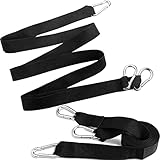
Overview: This minimalist two-strap set takes a radically different approach, offering pure functionality without a traditional harness. The dual nylon straps with mountaineering buckles enable two-point attachment for athletes seeking a lightweight, portable solution for sled and tire pulling exercises anywhere.
What Makes It Stand Out: The two-point attachment system distributes load more evenly than single-point designs, reducing torque on the body during intense pulls. The mountaineering-grade buckles provide security under tension. As a pair, they allow simultaneous multi-directional training or backup replacement. The stripped-down design appeals to purists wanting direct force transfer.
Value for Money: At $19.99 for two straps, the per-unit cost is exceptional. This system assumes you have or prefer using your own weight belt or vest, making it perfect for athletes with existing gear. The value multiplies for coaches outfitting multiple athletes simultaneously. It’s a specialized but cost-effective training tool.
Strengths and Weaknesses: Strengths include superior load distribution, professional-grade hardware, dual-strap versatility, and compact storage. The nylon construction withstands serious abuse. Weaknesses are the lack of integrated padding requiring separate belt/vest, steeper learning curve for proper setup, and limited appeal for casual users wanting an all-in-one solution.
Bottom Line: Best suited for experienced trainees and coaches with existing equipment. The two-point system offers biomechanical advantages but demands more user knowledge. For those seeking a modular, heavy-duty addition to their training arsenal, it’s an unbeatable value. Not for beginners wanting simplicity.
What Makes a Weight Sled Harness Essential for Athletic Training
The connection between athlete and resistance defines the entire training stimulus. A poorly designed harness introduces energy leaks, compromises posture, and can even lead to chronic shoulder or lower back issues. Conversely, a well-engineered harness becomes an extension of your body, translating every ounce of force directly into the ground through the sled.
The Biomechanics Behind Sled Training
Sled training uniquely develops horizontal force production—something traditional vertical lifts like squats and deadlifts can’t fully replicate. Your harness serves as the kinetic link, transferring power from your hips through your torso and into the sled. When this link is rigid, uncomfortable, or poorly aligned, your body instinctively shortens its stride, reduces knee drive, and compromises the very movement patterns you’re trying to enhance. The best harnesses maintain your natural sprint mechanics while adding purposeful resistance, not artificial restriction.
Key Components of a High-Quality Weight Sled Harness
Understanding the anatomy of a sled harness helps you evaluate quality regardless of marketing claims. Each component plays a specific role in performance, safety, and comfort.
Material Matters: Durability vs. Comfort
The material debate isn’t about finding the “best” fabric—it’s about matching material properties to your training environment. Heavy-duty nylon webbing offers unmatched tensile strength and abrasion resistance for outdoor turf work, but can dig into your shoulders during high-rep sessions. Neoprene padding provides luxurious comfort but breaks down faster under heavy loads and traps heat during intense intervals. The sweet spot often lies in hybrid designs: reinforced ballistic nylon in high-stress areas with moisture-wicking, breathable padding at contact points. Look for UV-resistant stitching if you’re training outdoors regularly—sun exposure degrades standard thread surprisingly quickly.
Strap Configuration and Load Distribution
Single-strap designs might seem sleek, but they create a shearing force across your torso that can twist your spine under heavy loads. Dual-strap configurations—whether they converge at a central ring or remain separate—distribute force more evenly. The angle at which straps leave your body matters tremendously: too steep and you’ll feel like you’re being pulled backward; too shallow and the sled will fishtail. Optimal geometry typically positions the connection point between your mid-thoracic spine and lower lumbar region, maintaining your center of mass.
Connection Points and Hardware Quality
That metal D-ring or carabiner isn’t just a simple clip—it’s a potential failure point under several hundred pounds of dynamic load. Forged steel hardware with welded joints far outperforms cast metal alternatives. Quick-clip mechanisms offer convenience but sacrifice some security; screw-gate carabiners take seconds longer to attach but provide peace of mind during maximal effort pulls. Inspect the stitching pattern where hardware meets webbing: box-X stitching with reinforced bar tacking indicates serious engineering, while simple straight stitches suggest a disposable product.
Types of Weight Sled Harnesses: Finding Your Perfect Match
Not all harnesses serve the same purpose. The design philosophy behind each type directly impacts which athletic qualities you’ll develop.
Vest-Style Harnesses for Maximum Torso Support
Vest-style harnesses wrap around your entire torso like a tactical plate carrier, distributing load across your chest, back, and shoulders. This design excels for heavy, slow-strength work—think offensive linemen driving against massive resistance. The broad surface area prevents pressure points but can restrict arm swing and breathing if over-tightened. They’re ideal for athletes who need to build brute force without compromising spinal integrity, particularly during backward drags or lateral shuffles where stability is paramount.
Belt-Style Harnesses for Hip-Drive Focus
Sitting lower on your body, belt-style harnesses position the load directly on your hips and pelvis. This setup forces your glutes and hamstrings to do the heavy lifting, making it the gold standard for sprint-specific training. The lower attachment point encourages proper forward lean and minimizes upper-body involvement. However, they require stronger core stabilization and can feel awkward until you learn to “wear” the load rather than fight it. Sprinters and track athletes typically gravitate toward this design for its direct translation to acceleration mechanics.
Shoulder-Strap Designs for Versatility
The minimalist’s choice, shoulder-strap harnesses offer maximum freedom of movement at the cost of load distribution. Two padded straps cross your shoulders and connect at a central point on your upper back. This design allows unrestricted arm swing and rotational movement, making it perfect for multi-directional agility work and rotational sports like baseball or tennis. The trade-off? You’ll feel every pound of resistance concentrated on your traps and shoulders. Save these for lighter, technique-focused sessions rather than maximal load work.
Sizing and Fit: The Make-or-Break Factor
A harness that doesn’t fit properly will sabotage your training regardless of its price tag or features. Unlike shoes or apparel, harness sizing isn’t standardized across manufacturers, making fit testing crucial.
Adjustability Features for Growing Athletes
Youth athletes and collegiate programs need harnesses that adapt to changing bodies. Look for multiple adjustment points: shoulder straps with sliding buckles, side straps with generous length, and perhaps most importantly, a sternum strap that can be raised or lowered. Some advanced designs feature modular padding systems that can be repositioned as an athlete’s musculature develops. Remember, a harness that fits a 150-pound freshman won’t necessarily work for their 190-pound senior-year frame.
Load Capacity and Weight Distribution Dynamics
The stated weight capacity of a harness tells only part of the story. Dynamic loading—when you accelerate and the sled jerks forward—can create peak forces 1.5 to 2 times higher than the static weight on the sled. A harness rated for 300 pounds might hold up under a slow drag but fail catastrophically during an explosive start.
More importantly, consider how the harness distributes that load across your body. A 200-pound load concentrated on two-inch-wide straps creates significantly more pressure (and potential tissue damage) than the same load spread across six inches of padded surface. Calculate the pressure per square inch if you’re unsure—your soft tissue will thank you.
Training-Specific Considerations for Different Sports
Your sport’s demands should dictate your harness choice more than any other factor. The same harness that works for a powerlifter’s GPP work won’t serve a soccer player’s needs.
Sprint-Specific Harness Features
For sprinters, every millisecond and millimeter of form matters. Sprint-specific harnesses prioritize minimal weight, aerodynamic profile, and a connection point that sits as close to your center of mass as possible. They often sacrifice padding to reduce bulk, assuming athletes will use them for short, intense efforts rather than long grinding sessions. The best sprint harnesses also feature anti-rotation properties—stabilizing straps that prevent the harness from twisting during arm drive, which could throw off your mechanics.
Multi-Directional Training Requirements
Basketball players, football skill positions, and MMA fighters need harnesses that accommodate lateral movement, backpedaling, and rapid direction changes. These harnesses require flexible connection points that don’t bind when you change direction, plus padding that stays in place during rotational movements. Look for designs with articulated joints or swivel clips that allow the leash to move independently of the harness body. Fixed, rigid attachment points will pull you off-balance during a sharp cut.
Safety Features That Should Never Be Compromised
Your harness is a safety device as much as a training tool. Certain features aren’t optional—they’re mandatory for intelligent training.
Quick-Release Mechanisms and Emergency Protocols
Every harness should have a reliable quick-release system that you can operate blindfolded. In a perfect world, you’ll never need it. In reality, sleds tip, straps tangle, and athletes occasionally need to bail instantly. The release mechanism should be accessible from multiple positions (standing, kneeling, fallen) and require a deliberate action to prevent accidental triggering. Test it before every session—muscle memory for emergency procedures is as important as the movement pattern you’re training.
Maintenance and Longevity: Protecting Your Investment
A premium harness can last five to ten years with proper care, while a neglected one might fail within months. The difference isn’t in the materials; it’s in the maintenance.
Clean your harness monthly with mild soap and water, paying special attention to areas where salt and sweat accumulate. Avoid machine washing—the agitation breaks down fibers. Inspect stitching before each use, looking for fraying or pulled threads. Store it hung up rather than crumpled in a gym bag to prevent permanent creases that become weak points. And never, ever leave it in direct sunlight between sessions. UV degradation is the silent killer of nylon gear.
Common Mistakes Athletes Make When Choosing Harnesses
The most frequent error is prioritizing comfort over function. Yes, you want a harness that doesn’t dig into your shoulders, but excessive padding often signals a design that compensates for poor load distribution. Another mistake is buying based on price alone—a $50 harness that lasts six months costs more per use than a $200 harness that lasts five years.
Perhaps the most damaging mistake is choosing a harness based on what your favorite athlete uses on Instagram. Their body, sport, and training goals are likely different from yours. A harness is a personal piece of equipment that should match your biomechanics, not someone else’s highlight reel.
Integrating Sled Training into Your Periodization Model
Your harness choice should align with your training phase. During general preparation phases, when you’re building work capacity with longer, lighter drags, prioritize comfort and breathability. As you transition to specific preparation and load increases, switch to a more robust design that can handle heavier weights without compromising sprint mechanics.
Consider having two harnesses: a lighter, more comfortable model for high-volume tempo work, and a heavy-duty performance harness for maximal strength and acceleration days. This approach extends the life of both pieces and ensures you’re always using the right tool for the job.
DIY vs. Commercial Harnesses: What You Need to Know
The DIY route tempts many budget-conscious athletes, and it’s possible to build a functional harness from climbing webbing and hardware store components. However, commercial harnesses undergo rigorous testing for load ratings, seam strength, and material fatigue—testing you simply can’t replicate in your garage. The cost savings rarely justify the risk, especially when towing heavy loads at high speeds.
If you must go DIY, use only new, rated climbing webbing (never old or used rope), triple-stitch all connections with UV-resistant thread, and test it with progressively heavier loads while filming for any signs of stretching or failure. Still, for most athletes, the liability and uncertainty make commercial options the smarter choice.
Budget Considerations: Getting the Best Value
Price ranges from $40 to $300+, but the sweet spot for most serious athletes lies between $120 and $180. Below this range, you’re sacrificing hardware quality or stitching durability. Above it, you’re often paying for brand prestige or marginal gains in weight savings that only elite sprinters will notice.
Calculate cost per use: a $150 harness used three times weekly for five years costs about 19 cents per session. Spread across an entire team, the investment becomes even more negligible. Don’t forget to factor in replacement parts—some premium harnesses offer replaceable padding and straps, effectively giving you a lifetime product.
Frequently Asked Questions
How tight should my weight sled harness fit?
Your harness should be snug enough that it doesn’t shift during movement, but not so tight that it restricts breathing or shoulder mobility. You should be able to fit two fingers between the strap and your body at any point. During heavy loading, the harness will tighten slightly as it stretches, so account for this by starting with a slightly looser fit than feels intuitive.
Can I use the same harness for forward drags and backward pulls?
Most harnesses can handle both, but the ideal setup differs. Forward drags work best with lower attachment points near your hips, while backward pulls often feel more stable with higher chest-level connections. Some versatile designs feature adjustable attachment points that slide up and down the back panel. If your harness has a fixed point, position it for your primary movement pattern and accept minor compromises on the secondary exercise.
How do I know when it’s time to replace my harness?
Replace your harness immediately if you notice any frayed stitching, cracked hardware, or webbing that has become stiff or discolored from UV exposure. Also, retire harnesses that have been involved in any high-impact incidents where the sled stopped suddenly, as this can create internal fiber damage invisible to the eye. As a general rule, if you train regularly, plan on replacement every 3-5 years even without visible damage.
Will a weight sled harness damage my shoulders or back?
A properly fitted, quality harness won’t cause damage and actually reinforces proper posture. Problems arise from ill-fitting equipment that places shear forces on your spine or concentrates pressure on small areas of soft tissue. Start with lighter loads to allow your body to adapt, and always maintain neutral spine alignment. If you experience bruising or persistent soreness, your harness either doesn’t fit or isn’t appropriate for the load you’re using.
What’s the difference between a sled harness and a sprinting parachute harness?
Parachute harnesses are designed for minimal load and maximum aerodynamic drag, using thin straps and lightweight materials. Sled harnesses must handle significantly higher forces and dynamic jerking motions. Using a parachute harness for sled work is dangerous and will likely result in equipment failure. Conversely, sled harnesses work fine for parachute training but may feel bulky and overbuilt.
Can I wear my harness over a hoodie or jacket?
You can, but you’ll sacrifice fit precision and increase the risk of the harness shifting during movement. Thick clothing creates a compressible layer that changes how the load distributes across your body. For cold-weather training, consider a harness with larger adjustment ranges and wear a thin compression layer underneath rather than bulky outerwear. If you must wear a jacket, choose a form-fitting softshell that won’t bunch.
How do I clean my harness without weakening it?
Hand-wash with lukewarm water and mild detergent, gently scrubbing with a soft brush to remove salt and grime. Rinse thoroughly and hang to air dry—never use a machine dryer, as heat weakens nylon fibers. Avoid harsh chemicals like bleach or fabric softeners. For stubborn odors, a diluted vinegar soak (1 part vinegar to 4 parts water) before washing can help without compromising material integrity.
Are there weight limits I should observe for safety?
Most quality harnesses are rated for 300-500 pounds of static load, but dynamic loading changes the equation. A good rule of thumb: never exceed 50% of your body weight for sprint work, and keep maximal strength work under double your body weight unless you’re an advanced athlete with perfect technique. The sled itself adds another variable—heavier sleds are more stable but create greater initial peak forces when you accelerate.
Can youth athletes use adult-sized harnesses safely?
No. Oversized harnesses on youth athletes create dangerous gaps where straps can catch, and the load distributes incorrectly across their developing skeletal structure. Youth-specific models feature narrower straps, smaller circumferences, and softer padding appropriate for lighter loads and smaller bodies. Never compromise on fit—a harness should be sized to the athlete, not adapted with creative tightening.
What’s the best way to store my harness between sessions?
Hang it on a wide, rounded hook or hanger to prevent creasing the straps. Store in a cool, dry place away from direct sunlight and chemical fumes (like those in a garage with a running car). Avoid stuffing it in a gym bag where moisture gets trapped and creates mildew. If you train outdoors in rain or snow, allow the harness to dry completely before storage, and consider a breathable mesh storage bag to prevent moisture buildup.